MabDesign’s market analyses give you a monthly overview of market dynamics and projects in development for a given indication or technology, to help you better understand the constantly evolving market of biologics and biomanufacturing. For this month of pink October, we take a look at the market and projects currently under development for the treatment of breast cancer.
Breast cancer is the most common cancer in women: it accounts for more than a third of all cancers in women, and is also the leading cause of cancer-related death in women. According to the WHO, in 2022, 2.3 million cases were diagnosed, causing 670,000 deaths worldwide. Screening programmes that have been in place for several years have nevertheless helped to reduce mortality in countries with a high human development index.
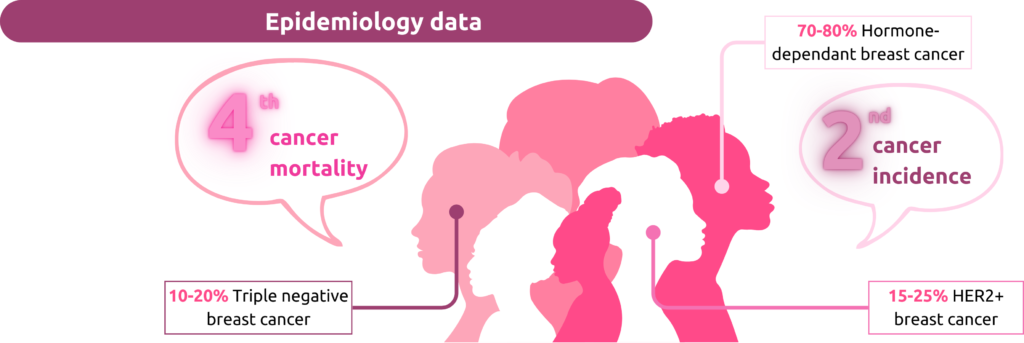
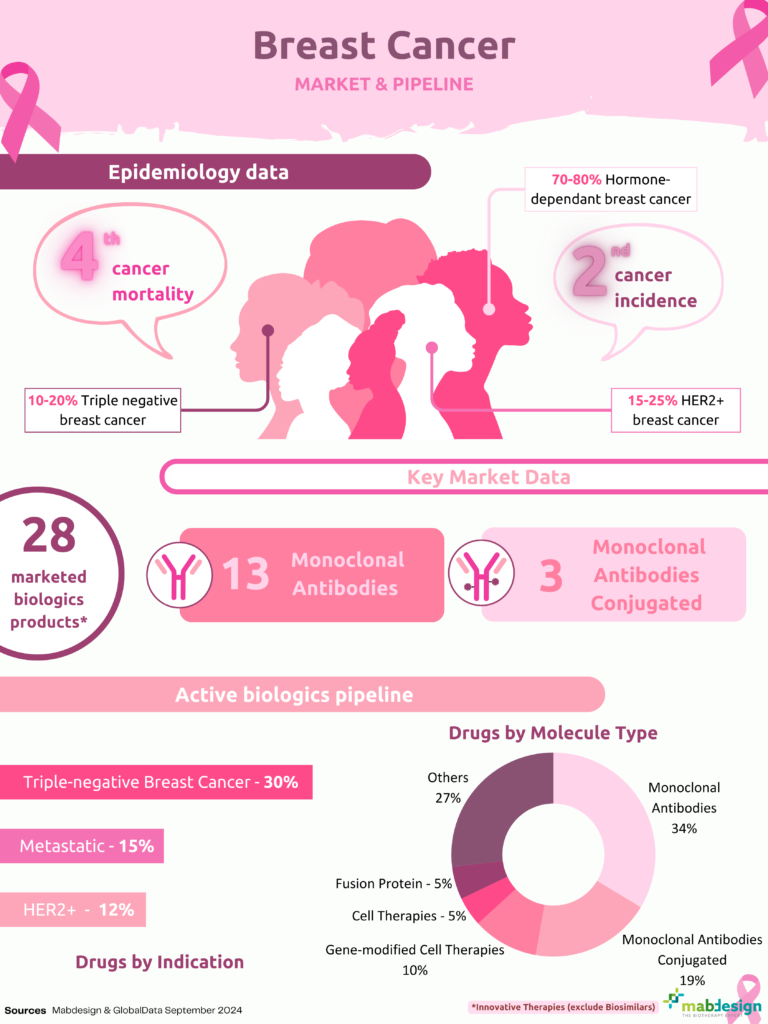
Breast cancers are often classified according to immunohistochemical criteria, with three main categories: hormone-dependent cancers (70-80%), i.e. positive for oestrogen and/or progesterone receptors, HER2+ cancers, and triple-negative cancers (13-20%) having none of these three markers.
Epidemiological data
Breast cancer market
The vast majority of products on the market indicated for breast cancer are small molecules. However, 28 biomedicines (excluding biosimilars) are currently available: the vast majority are therapeutic proteins, including 13 monoclonal antibodies and 3 antibody-drug conjugates.
Products on the market
biologics (excluding biosimilars)
0
mAbs
0
ADCs
0
active breast cancer pipeline
The pipeline is rich, and as for the products on the market overall, it is dominated by antibody-based strategies: 34% of products are monoclonal antibodies, and 19% are antibody-drug conjugates (ADCs). On the other hand,ATMPssuch as cell therapies (5%) and genetically modified cell therapies (10%) are appearing in the pipeline.
In terms of indication, the projects in the pipeline mainly target triple-negative breast cancer (35%),followed by metastatic cancers (15%) and HER2+ cancers (10%).
MabDesign has acquired and cultivates its expertise in all market segments associated with biopharmaceuticals and biomanufacturing. Our team of consultants is at your disposal to support you in all your biotherapy-related projects. Feel free to explore our range of services, including our marketing and strategic analyses, if you’d like to find out more!