Regulations & quality and bioproduction

Level 1 -

Bioprocessing: Upstream Process – from Hybridoma to Clarification

Presentation

Why participate?

Present the technological, methodological, and technical aspects involved in cell line development and Upstream Process (USP) stages

Training Context:

Transferring technology and scaling up from hybridoma-based production to bioreactor cultures with stable cell lines requires a solid understanding of the available technologies, including their advantages and limitations.

Learning objectives

  • Master the methodology for transferring hybridomas to CHO/HEK cells
  • Design cell lines suitable for large-scale bioproduction
  • Identify key technologies currently used in Upstream Processing (USP)
  • Understand scale-up challenges and solutions
  • Optimize bioprocesses for efficient production

Teaching methods

Interactive Teaching, Case Studies, Experience Sharing

Audience

R&D Managers, Project Leaders, Production Engineers and Technicians, Academic Researchers

Prerequisites

Solid knowledge of biotechnology/biochemistry and therapeutic antibodies or recombinant proteins, or prior completion of the courses “Fundamentals of therapeutic antibodies” or “Introduction to biomanufacturing”

Duration

1 day, 7 hours

Price

750 € HT (Public)
600 € HT (Membre)
300 € HT (Académique)

Prices: Excluding tax, as the training is not subject to VAT.
In-house training rate: Please contact us.

Trainers

Catalogue de formations-MabDesign-2023.pdf (9)

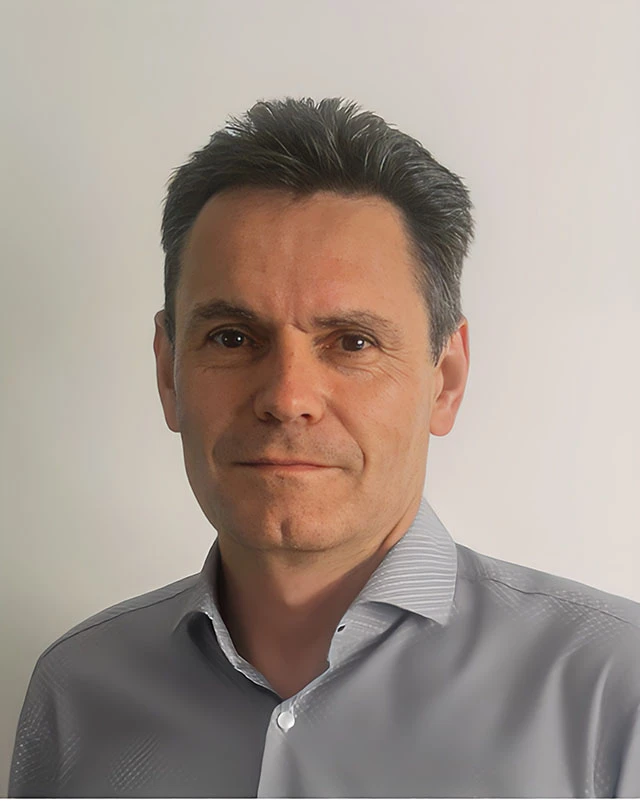
Alexandre

FONTAYNE

Expert consultant, Founder
BE4S
CSO for Biological Products
Unither Pharmaceuticals

Rating

Participant satisfaction rate :

5/5
(average over 6 people).

Return rate of satisfaction questionnaires :

100%

The benefits of our courses

  • Personalized support
  • Skills assessment
  • Certificate of completion
  • Training quality evaluation
  • Accessible to people with disabilities (please contact us)

How to access and deadlines

Registering online or by e-mail is a pre-registration. We will process your request within one week:

  • Contact by e-mail or telephone
  • Sending of administrative and educational documents: training agreement, training programme and positioning questionnaire.

Signing the training agreement commits the company or individual to the training course. Cancellation conditions are specified in the training agreement.

When no session date is specified, pre-registration allows us to note your interest in a programme, and we will keep you informed as soon as a new session is organised.

For more information, contact Daphné Brisard: 02 47 36 63 18 or formation@mabdesign.fr

Jean-Roch Fabreguettes

MEARY

Directeur Médical et Personne Responsable du Centre MEARY de thérapie cellulaire et génique au sein de l’hôpital Saint-Louis à Paris

Jean-Roch Fabreguettes est un spécialiste de la recherche translationnelle et des phases précoces de développement clinique des médicaments de thérapie innovantes (MTI). Pharmacien, titulaire d’un doctorat de l’Université de Montpellier 1, il a travaillé plus de 25 ans dans le domaine et a contribué, pour des équipes académiques comme pour des start-ups, à la réalisation de plus de 30 programmes de recherche sur différents types de MTI : thérapie génique in vivo ou ex vivo, thérapie cellulaire, ingénierie tissulaire… Il est actuellement Directeur Médical et Personne Responsable du Centre MEARY de thérapie cellulaire et génique au sein de l’hôpital Saint-Louis à Paris. Le centre MEARY est une plateforme de l’Assistance Publique – Hôpitaux de Paris (AP-HP), dédiée à la fabrication de médicament de thérapie innovante expérimentaux. Laboratoire membre de l’ISCT, il est autorisé par l’ANSM et dispose d’un certificat GMP. A ce titre Jean-Roch Fabreguettes est impliqué dans le développement clinique et la fabrication de nombreux MTI : CAR-T cells, lymphocytes T régulateurs, cellules stromales mésenchymateuses…

Précédemment, Jean-Roch Fabreguettes a été expert Qualité (CMC) auprès de l’ANSM durant 9 ans et a conseillé différentes sociétés de biotechnologies. Il est un intervenant régulier pour l’Université Paris Cité et un membre actif de l’ISCT et de réseaux nationaux et internationaux sur les MTI (UNI-TC, Join4ATMP).